Package Contents
Application_Install.exe
Some of us aren’t chasing highs because we’re weak or broken or morally off. Some of us are chasing normal. When your brain runs low on dopamine at baseline, the world feels flat and muted and gray, and anything that turns the color back on feels like oxygen. That’s not a character flaw. That’s chemistry. And when you layer in ADHD, trauma, PTSD, and genetic variants that literally reduce how many dopamine receptors you’re born with, addiction stops being a mystery and starts making a painful amount of sense.
The application here is compassion. For yourself. For the part of you that reached for something that worked, even if it wrecked things. Recovery isn’t about white-knuckling your way through cravings. It’s about slowly, deliberately teaching your brain to make its own dopamine again. Slower. Smaller. Sustainable. Walking. Connection. Sunlight. Community. These aren’t consolation prizes. They’re the actual repair work.
That is the application. The rest is the source code.
Source_Code.txt
The open-source code below is free, for you to analyze, modify, and build your own application with.
> volume_knob_turned_down.log
Most people don’t wake up in the morning thinking about dopamine. I do.
For me, dopamine isn’t just a buzzword thrown around in wellness blogs. It’s the invisible tide that shapes my moods, my focus, and my addictions. It’s the reason I can get locked into endless scrolling, chain-smoking in the past, or chasing one more drink. And it’s the reason recovery hasn’t just been about willpower. It’s been about rewiring my whole brain.
Imagine starting every day with the volume knob on life turned down. Food tastes dull. Music doesn’t hit the same. Conversations feel muted. It’s not depression exactly. It’s more like existing in grayscale while everyone else seems to live in color.
That’s what a chronically low dopamine baseline feels like.
So when I found things that lit me up, alcohol, nicotine, kratom, marijuana, and other drugs, the rush felt magical. I wasn’t just chasing pleasure. I was chasing normalcy, the sense of being alive and connected. But as addiction science tells us, every spike comes with a crash. And with my kind of brain, those crashes dug me deeper into the hole I was trying to climb out of.
> biological_cards_stacked.config
Through years of evaluations, brain scans, and genetic testing, I’ve learned that I carry some of the biological cards stacked against me:
- Lower baseline dopamine tone, my brain literally produces or regulates dopamine less efficiently than average.
- ADHD-Inattentive type, tied to dopamine signaling deficits in the prefrontal cortex.
- Trauma and PTSD, living in survival mode burns through dopamine reserves.
- MTHFR genetic variant, makes it harder for my body to synthesize neurotransmitters like dopamine in the first place.
- DRD2 Taq1A genetic variant, I have 30-40% less dopamine receptors than a normal person, resulting in a 80% greater risk of Bipolar Disorder, ADHD, and addiction problems.
So no wonder I reached for substances. My nervous system was starving.
> roxy_instance_initialized.ifs
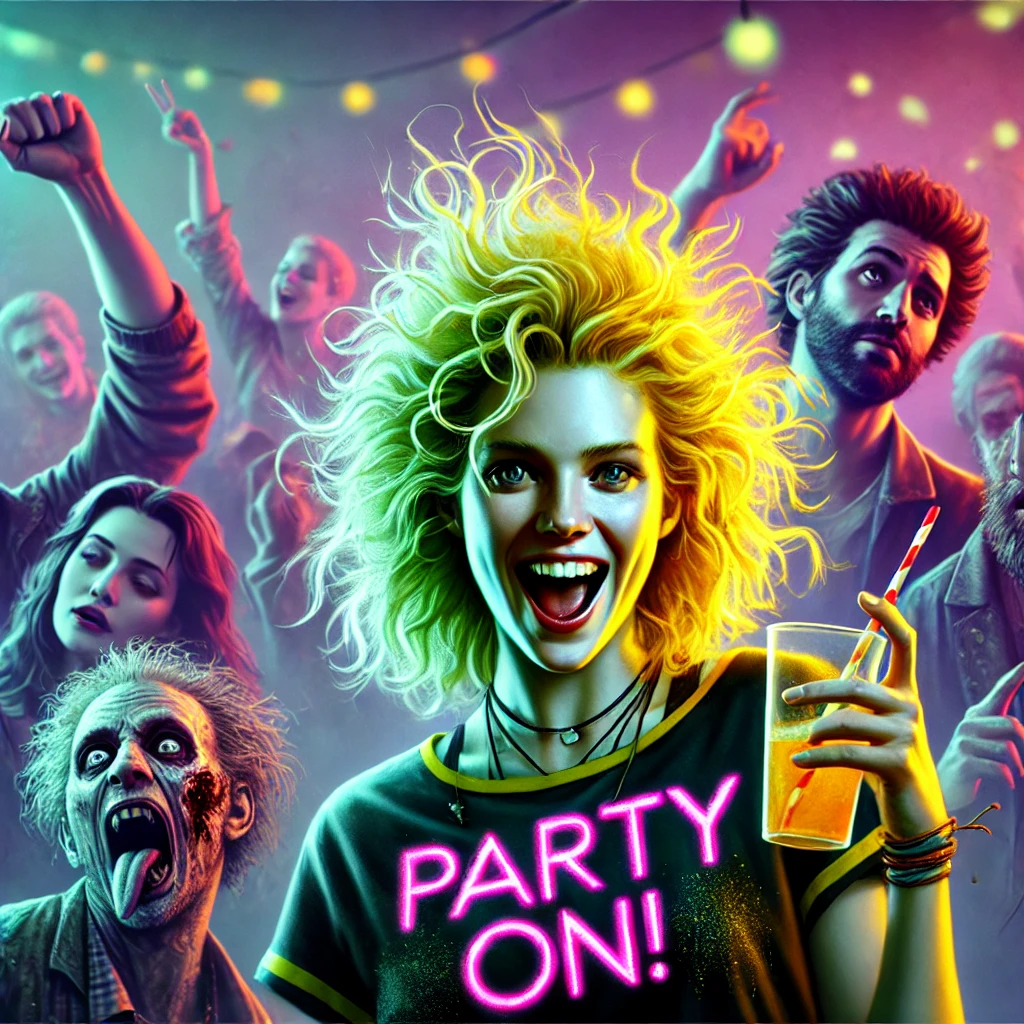
In Internal Family Systems (IFS) therapy, we learn to meet our inner parts, the different voices and subpersonalities that carry our pain, our protectiveness, and our coping strategies.
That’s how I met Roxy.
Roxy is my thrill-seeker, my dopamine-hungry part, the love and romance craver.
She’s the one who whispers, “Just one hit, just one drink, just one more dose of affection…you deserve it.”
She’s not evil. She’s not broken.
She’s a protector who learned that the fastest way to turn the lights on in my dull, gray world was through a substance.
In IFS, I don’t try to exile Roxy. I try to listen to her. To thank her. To remind her that I understand why she did what she did. And to show her there are gentler, more sustainable ways to feel alive.
> dopamine_repair_protocol.sh
Recovery for me isn’t just about saying no to substances. It’s about slowly teaching my brain to make its own dopamine again and to find joy in smaller, slower, healthier doses.
- Wellbutrin and VNS therapy help nudge my dopamine circuits awake.
- Omega-3s, B12, magnesium, zinc give my brain the raw materials to build neurotransmitters.
- Long distance walking and photography are like weightlifting for dopamine. The gains are slower, but they last longer.
- Connection with my daughters, my community, and my peers in recovery, that’s the deepest dopamine I’ve ever known.
I still hear Roxy. She still craves the rush. But together, we’re learning that aliveness doesn’t have to come from a bottle, a pill, or a pipe.
> why_I_wrote_this.readme
I’m sharing this because too many people still believe addiction is about moral failure or lack of discipline. For some of us, it’s about living in a body that is wired for low dopamine. That doesn’t excuse the harm I’ve caused in my addiction, but it explains the powerful gravitational pull I’ve had to fight against.
And it gives me compassion for myself, for Roxy, and for anyone else out there who feels like they’re chasing color in a gray world.
If you’re struggling too:
You’re not broken.
Your brain may just be working with different chemistry.
Healing isn’t about silencing your dopamine-seeking parts. It’s about listening to them, understanding them, and helping them find safer ways to shine.