
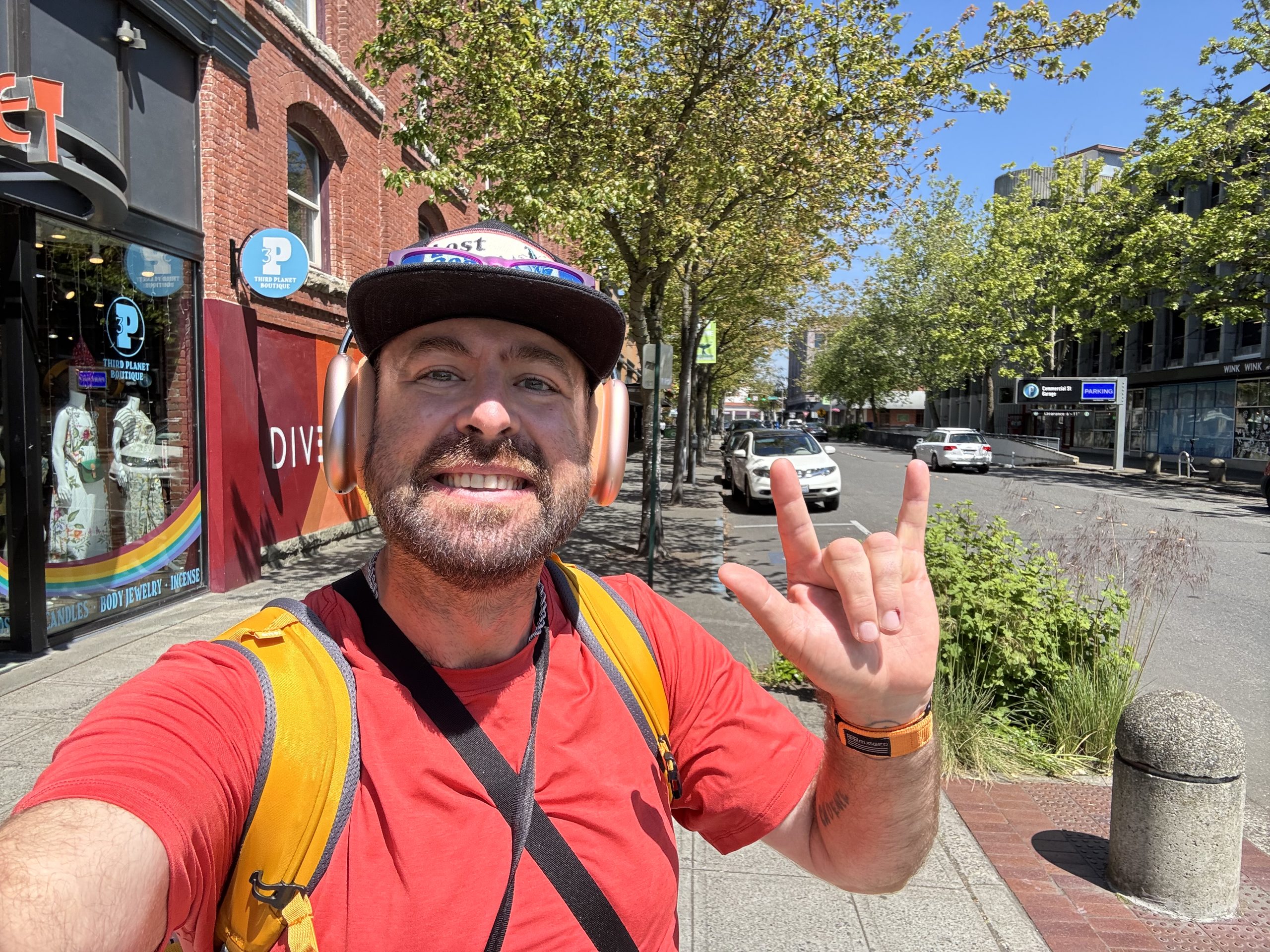
PS C:\> tar -xf A_Walk_To_Remember_v1.zip
Application_Install.exe
Your brain doesn’t keep you stuck because it’s afraid of what’s ahead. It keeps you stuck because it’s afraid of losing what it already knows. Even when what it knows is destroying you, it still feels safer than the unknown. That fear gets wired in early, usually by something that happened before you even had the language for it, and it runs every destructive decision you make for the rest of your life until you finally name it and face it down.
That fear drove me for decades. And when I finally stopped running it, I had to grieve. Not one clean loss, but a whole stack of them, all moving on different timelines, all surfacing at different depths. The nervous system doesn’t care about your therapy progress or what your rational mind knows. It has its own schedule. This is what that looks like from the inside: a 12-mile walk, a milk chocolate bar, a mail truck hitting you, and the grief that was waiting at the end of it all.
That is the application. The rest is the source code.
Source_Code.txt
The open-source code below is free, for you to analyze, modify, and build your own application with.
> what the brain actually fears: known_losses.log
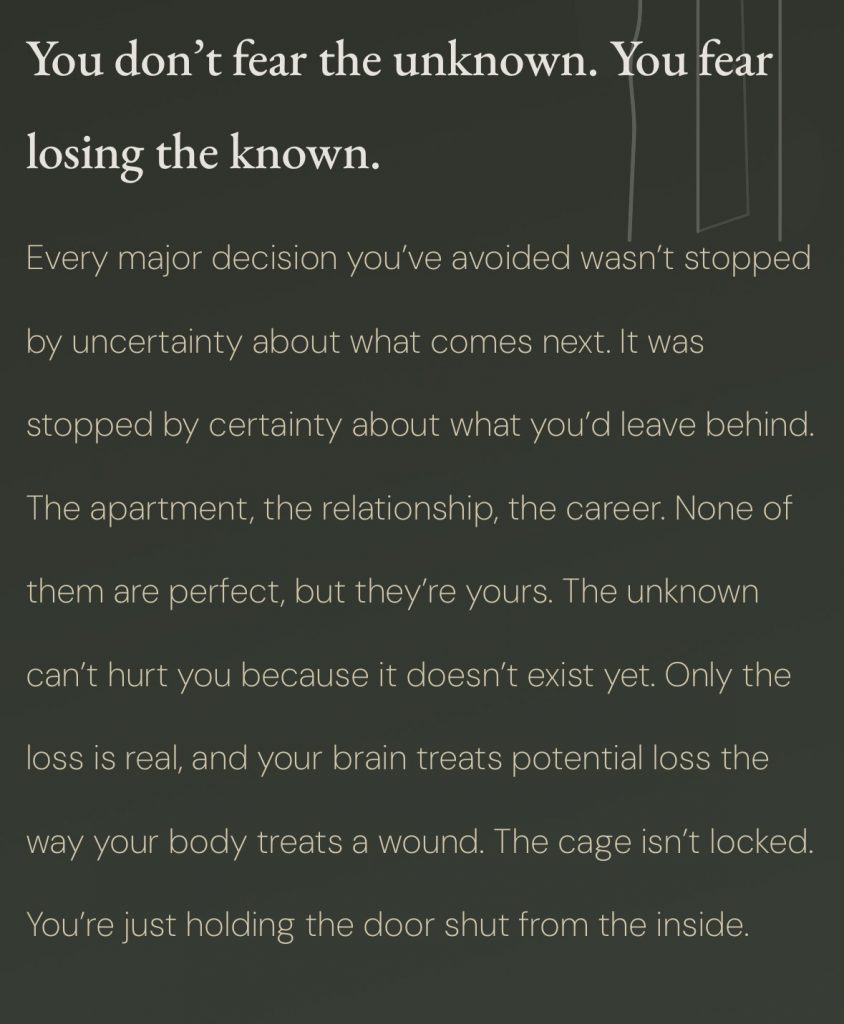
I woke up this morning reading my meditations. One that stood out was the one about fear of the unknown. Every decision you have avoided wasn’t stopped by fear of what comes next, the unknown, but ultimately fear of what you’d leave behind, the known. The loss is real, and your brain treats potential future loss like it’s danger. The truth is the unknown can’t hurt you because it doesn’t even exist. It resonated with me and I bet it resonates with you too. We get so worked up with anxiety about the things that haven’t happened, because our fear is rooted in the things that have. This keeps us stuck because we are terrified to move forward. It makes us avoid realities because the past is known. We can get so blinded by the fear of the unknown that we can’t even move forward with our lives.
This type of fear also drives anxieties, and anxieties drive us to do unimaginable things to avoid them. Often these fears of ours are decades old and rooted in an event that happened to us as a child or perhaps later as an adult. Therapists like to call these “traumas.” The unimaginable things we do to avoid the traumas in our present life, real or perceived, tends to create the very thing we are most afraid of. Those unimaginable things are trauma responses. I have lived in my trauma responses. I have identified 19 patterns I developed over the course of my life, that once were protective and served a purpose for me, but then became counter-productive and destructive in my present reality. The biggest one was avoidance. Avoidance of nearly everything, and it was to protect me from my deep rooted fear of being alone. As I talked about in Legacy_Fear_v1.zip, this fear drove every single destructive and harmful decision I have ever made. I was so afraid of the “known” past of being alone and the danger it once was for me, that I couldn’t possibly move into a future where it wasn’t a danger at all. Eventually I did, and I found freedom that I have never had.
> twelve miles with a mission: community_kindness.exe
I thought about all of this today, before I put on my Chacos and decided to go for a walk. At around noon, I started the walk activity on my watch, packed up my backpack with everything I needed to survive the entire day on foot, and set out on a quest that I won’t soon forget. The initial mission of my quest was to continue work on my community project focused on spreading hope and happiness in my community. I don’t know if you have looked around lately, but our society is in a deep deficit when it comes to these things. I decided to launch a project about 6 weeks ago that is spreading like wildfire and has since expanded in so many directions it is now hard to even track. So far, the project has resulted in a known count of over 1,250 acts of kindness, but that number is likely much larger for several reasons. One is that each act of kindness tends to get paid forward into another act of kindness. The second is that some acts of kindness, due to their nature, are delivered to possibly hundreds or even thousands of people over a period of time. It is all hard to measure.
Today, my quest was to facilitate the next 500 acts of kindness in our community, and it required a few stops to coordinate with other people involved in the project. My first stop was downtown, and then my second stop was at a store near the Lettered Streets. After my first stop downtown, I swung by a local shop where one of my friends works. She was there, and we had a lovely conversation about life and where we each have gone with our lives in the past 4 years we have come to know each other. We met each other on a dating app in 2022, but after our first meeting in person, realized that we weren’t going to be compatible on a romantic level and instead formed a long lasting friendship. She gave me a great big long hug and I proceeded on my mission.
After I met with the folks at each location, I proceeded to walk to Elizabeth Station to get a beverage, and possibly wander on for my daily walk to Locust Beach for some low-tide sun. While at Elizabeth Station, I found out that a close friend who lives just up the road off Eldridge had broken her ankle and was suddenly homebound. There wasn’t a whole lot I could do for her, but I asked what her favorite type of chocolate was and if I could swing by to drop it off. She told me “milk chocolate,” so I grabbed a bar and my beverage, and headed a mile up Holly to Eldridge to go see her. A friend drove by shortly after, waving and smiling at me as I was walking up the road, which on top of the visit downtown, and on top of the two other visits regarding my project, really made my day. We had a nice visit over some milk chocolate.
> the mail truck didn't see me: impact_event.log
Afterwards, I was feeling pretty hungry, so I decided not to do my daily walk to Locust Beach for low-tide sun and headed toward downtown to get some food. My nervous system had been dysregulated for the last 9 days, with no explanation for it. My nervous system has been dysregulated off and on since mid-February following some events in my life. And it had been dysregulated for most of the months prior following a major change in my life in November last year. This dysregulation has led to a complete destruction of my appetite and as such, I have lost over 10%, or 30 pounds of my body weight in just over 6 months. Regardless of all of this, I was having a true walk to remember. The sun was shining warm on my skin, it was in the mid-70s outside and clear. Absolutely beautiful day.
Then it happened.
I was walking and crossing in front of a mail truck that was waiting to turn right out of a gas station parking lot. I heard the engine rev up and before I could do anything the mail truck slammed into my left side. The driver didn’t see me in my bright orange clothing and yellow backpack directly in front of his mail truck. I rolled upwards onto the hood and exploded in anger at the driver with expletives (sorry, not sorry). Somehow I didn’t get injured despite the vehicle making complete contact with my left side. I was flooded with adrenaline and panicked and walked off as quickly as I could without looking back or drawing any attention to the scene. The mail truck sped off up Holly.
Five minutes later, I was down the street and all the sudden couldn’t think straight and was flooded with all kinds of emotions and adrenaline. I knew at that moment that I needed a time-out. So I spent the next several minutes sitting in the shade of some shrubbery in Old Town.
After a bit of time, I decided to continue toward downtown, but the adrenaline had destroyed my hunger, so I found myself just wandering with no real destination.
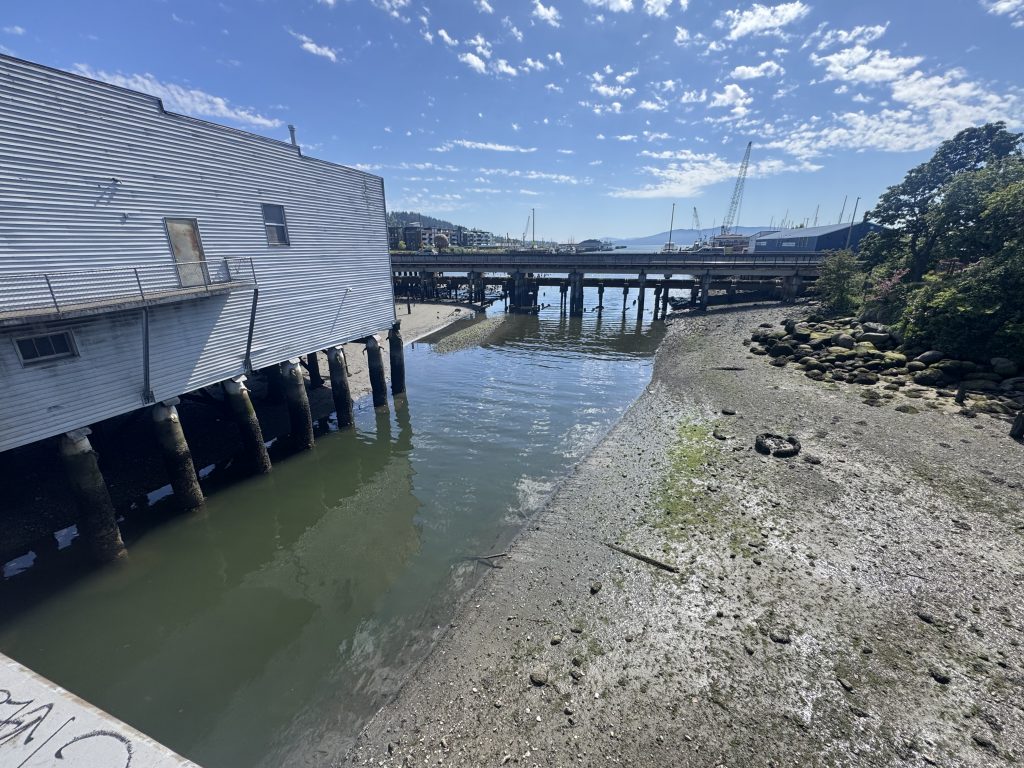
I had told a few friends what happened and one of them offered to meet me down at the Acid Ball. We met for about 30 minutes, which really helped me process the event and get my bearings. Once they left, I set off on foot to do my daily walk to Locust Beach, 3 miles away, still hoping for some low-tide sun.

I arrived at the beach around 6 PM, nearly 6 hours after I had left home at noon. I enjoyed the sun, a book, some music, and watching the people out on the tidal flats. I live for the low tide sunny moments like these. They are very grounding and beautiful, even today it was magic considering that I had been hit by a mail truck just 4 hours earlier.
> nine hours before the answer showed up: grief_queue.sys
While walking back home after 90 minutes on the beach, some things clicked for me about my nervous system. By the time I got home at 9 PM, after 9 hours and 12 miles on foot, I had figured out a mystery that has bothered me for months. My nervous system dysregulation seems to go in waves. Patterns of gaining intensity for weeks, and then sudden shifts to calm. I have learned to not analyze it or try to attach meaning to it, because it amplifies it and gives me a lot of anxiety. And all of it became very noticeable when I stopped cannabis and became totally sober on January 6th this year.
But inevitably, I had a shift from full dysregulation to nearly complete calm today. A day when I walked for 9 hours and 12 miles, and got hit by a mail truck. It made absolutely no sense. And despite my intentions to not analyze or make meaning of it all, I found myself realizing that something big was happening to me.
Grief was behind all of it.
My grief is not one thing. It rarely arrives as a single clean loss with a clear beginning and end. It arrives as a stack, multiple losses running simultaneously on different timelines, grieving in different parts of me at different depths.
There is the grief of the partnership I ended, the dreams and future I believed in with them, and the version of us that existed when things were good.
There is the grief of the actual ending and how it happened, which carries its own specific texture, particularly when I witnessed someone else’s devastation and couldn’t undo it.
There is the grief of losing my own identity, having chosen to dismantle patterns that were keeping me alive while quietly destroying me.
There is the grief of losing my parents.
There is the grief of losing all of the people close to me when I stopped living in my patterns and also all of the people I lost when I got sober from drugs and alcohol.
And underneath all of those is an older grief, a childhood wound that gets freshly activated every time something lands as unjust or undeserved, I feel shame, or people intentionally hurt me emotionally.
These don’t grieve on the same timeline. When one layer quiets, another that was waiting behind it begins to move. That’s not regression. That’s the queue working exactly the way grief queues work.
> the loop that won't find the exit: bargaining.exe
I find myself in patterns of bargaining with all of my griefs. Bargaining is widely defined as a defense against the feelings of helplessness experienced after a loss. It happens when people struggle to accept the reality of the loss and the limits of their control over the situation.
In real life that can look like feeling guilty or ashamed of your thoughts or actions, feeling scared, insecure, or anxious, ruminating over what could have been, holding yourself responsible for all of the circumstances of the loss, punishing yourself, worrying and overthinking things, judging yourself and others, making comparisons to others’ circumstances, trying to predict the future and assuming the worst, wishing or praying for a different outcome, or thinking and saying things like “what if” or “if only I had” or “if I do this then.”
My bargaining returns not because I’m stuck but because grief with unresolved ambiguity attached to it keeps sending my mind back to look for the lever it hasn’t tried yet. The one that would finally make my losses feel fair or not as painful. The one that would rewrite the endings. Each time the loop runs and finds no exit, a little more metabolizing happens. The loop runs shorter. This is not failure. This is the process, and it looks frustratingly like going in circles because it is going in circles, just slightly smaller ones each time.
> when the jolt brings quiet: retraumatization_cycle.log
What significantly slows my grief completion is what I’ve come to understand as re-traumatization interrupting the completion of a grief cycle. As time passes following an interruption and I move deeper into the gritty middle stages of grief, my nervous system gets louder and more activated. Then an exposure event occurs and something unexpected happens: the activation quiets. Today, it was getting hit by a mail truck.
The mail truck incident scared the hell out of me, and that was a re-traumatization of times in my life where I didn’t feel safe. If the driver hadn’t stopped in time, I could have been seriously injured, hospitalized, or even killed. My nervous system goes into a protective mode during these events, and the grief is put on hold completely. The interruption doesn’t move me forward so much as it forces a reset. My nervous system shifts from processing grief to processing survival, and in that shift something temporarily clarifies. I get a window of quiet, a moment where the noise of grief goes still because something more immediate has taken over. Then time passes again, I slide back into the dense middle of grief, and the nervous system gets loud again. Rinse and repeat, in slowly shrinking cycles.
This pattern also explains why people in grief sometimes reach for disruption, chaos, or intensity without fully understanding why. The nervous system learns that a jolt brings quiet, and it begins to crave that relief even when the source of the jolt is harmful or destabilizing. The quieting feels like progress. But it is temporary, and the grief is always waiting on the other side of it.
> THE SIGNAL WAS NEVER GONE: SIGNAL_RESTORED.LOG
Sobriety adds a layer of complexity that often goes unnamed. Substances don’t resolve nervous system dysregulation. They suppress the signal. When the suppression ends, everything that was always there becomes audible at once: the grief, a baseline activation that predates any of this entirely, the somatic releases of years of material that never had a body to move through. This is why sustained sobriety can feel paradoxically worse than using did. My sobriety turned into a living hell for the first 2.5 months. Midway into that period of time, I was absolutely losing my mind. I remember telling all of my professionals how much I didn’t understand why everything was getting worse the further I got into my sobriety. One would think the exact opposite. They all said, “Keep going, it will get better.”
The signal is finally unmuted. It’s loud before it calibrates. This is not evidence that something has gone wrong. It is evidence that something has finally been allowed to surface.
> healing measured by how pain moves: completion_not_absence.log
What actually helps my grief move is not shortening it but allowing it to complete more efficiently. Fewer re-traumatization events where I can influence that. More consistent co-regulation with safe people, because my nervous system genuinely regulates through proximity to other regulated nervous systems, and I have been doing most of this alone. Named understanding of what each wave is actually carrying, because grief I can approach directly loses charge faster than grief I approach sideways through bargaining or avoidance.
And perhaps most importantly, refusing to measure my progress by how little I feel.
My healing is not measured by the absence of pain. It is measured by how safely the pain moves through me when it comes.
the walk that cracked it open: nine_hours_twelve_miles.log
The day gave me everything at once. Twelve miles. A community I am actively trying to fill with more light. Friends who show up with hugs and chocolate and thirty minutes at the Acid Ball. A mail truck that should have broken something and didn’t. Ninety minutes on Locust beach sitting in the low-tide sun watching strangers walk the tidal flats while I quietly came back to myself. And by the time I got home at 9 PM, something had shifted. Not fixed. Not finished. But named. My nervous system had been screaming at me for months and it took nine hours on foot and getting hit by a mail truck for the message to finally land. The grief was always there. It was just waiting for me to stop running long enough to hear it. And now that I can hear it, I can actually work with it. That is the difference between being consumed by something and moving through it. I am moving through it.