Package Contents
Application_Install.exe
For years, I thought refusing to accept my bipolar disorder made me strong. It didn’t. I was in denial, telling myself I was more powerful than my diagnosis while skipping the things that helped me manage it. Then it showed up and did whatever it wanted. Underneath all that was grief. Grief for the brain I thought I was supposed to have, and the life I thought I was supposed to live.
Acceptance isn’t quitting treatment. It’s taking my meds, doing the work, and stopping the fight against what’s permanent. Managing a condition isn’t the same as chasing a cure. And sometimes there’s a conflict you can’t change, no matter how hard you fight. You can only change your response. For me, that meant severing ties and going off the radar. No response is a response. The people I support who keep fighting the unwinnable are exhausted, anxious, and usually getting worse. The ones who stop bargaining and let themselves grieve get some rest. That’s good grief. Actually feeling it instead of outrunning it.
That is the application. The rest is the source code.
Source_Code.txt
The open-source code below is free, for you to analyze, modify, and build your own application with.
> I wasn't strong, I was grieving: denial_process.log
I fought my diagnosis for years. Bipolar disorder, 2007, after several years of major depression. Plus generalized anxiety, ADHD, and PTSD for good measure. I hated all of it. The stigma, the meds, and how it seemed to take over my life.
Every time it flared up, I thought, good grief, this again. Eye roll. Sigh. Push through. I told myself I was stronger than it and it would never control me. Then it showed up and did whatever the fuck it wanted. Sometimes I couldn’t do anything about it.
I denied it had power. I avoided what it took to manage it. Why?
Because underneath it all was grief.
I lost something a lot of people get to keep: a brain that works without a pharmacy behind it. One that doesn’t need hundreds of pills, hours of therapy, and psychiatric appointments to stay balanced. I didn’t want to admit that loss was permanent. So I didn’t. For years.
Now I see it differently. It’s chemicals, like high cholesterol, blood pressure, diabetes, inflammation, you name it. Mine happen to mess with my thoughts and, on a bad day, my behavior. That doesn’t mean I’m powerless or that the disease drives the car all the time. I have a lot of control over how I manage it and how much I flare it up. I just can’t control whether I have it.
> the textbook gets one word right: finality.txt
The textbook definition of acceptance is
a person’s recognition and assent to the finality of a situation
Wikipedia
without trying to change it or protest it.
Finality. That’s the opposite of denial. Denial says it’s not final. I can change this. I can fight it. That’s bargaining, and bargaining keeps your nervous system lit up 24/7. I know. I lived there for years.
Now I fight like hell to manage bipolar. But I’m not fighting the diagnosis. I’m fighting to suffer less. I can control some parts of this, or at least avoid making them worse. For most of my life, I made things a lot worse.
Every time I landed in the hospital in a crisis, psychotic, suicidal, delusional, or paranoid, I was drunk. Every single time. Later, drugs got mixed in too. The last one was November 2023. Drunk and on three other drugs. The worst hospitalization of my life. Traumatic for me and everyone around me. I lost friends that day. I almost lost everyone. I said never again, and I meant it.
Back then, I never went more than 12 to 18 months without a hospitalization. Six weeks after that last one, I quit drinking. Almost three years later: no major hospitalization. No mania. Nothing psychotic, delusional, or paranoid.
One. Small. Change.
Am I cured? No. Could it happen again? Sure. But it won’t be as bad or as frequent. Alcohol poured gas on the fire every time. I will never show up to a hospital drunk again. Simple as that. And that alone makes the finality something I can live with.
> doing everything right and it still got dark: december_48hrs.log
Last December, I was doing everything right. Taking my meds. Going to therapy. Sober from alcohol. Doing what I could to manage my mental health.
I was fine that morning. Went for a walk and did my usual thinking, processing whatever needed processing. Then everything unraveled. Fast. I wasn’t sure I’d make it home without going straight to the hospital. I made it home, packed a bag, and left out anything with strings. Only stuff they’d let me keep on the unit. Been there. Done that. Knew what was coming.
And I was pissed. I was doing everything right and my brain was fucking with me anyway.
Shame. Fear. Confusion, because I couldn’t explain why it was happening. Then hopelessness: If doing everything right doesn’t work, what’s the point? Am I just going to have to deal with this shit forever? I compared myself to every neurotypical person I knew and screamed at the universe. Why me? What did I do to deserve this? Nobody deserves this.
It was stacked on top of everything else. Less than a month earlier, I’d lost a partnership and my identity. I’d already lost myself in my patterns, and I was being fed a steady diet of manipulation my brain couldn’t make sense of. Confusion, anxiety, panic, worry. My brain started shutting down. Something was about to short out.
So I checked myself in before it became a crisis. No talking myself out of it. No pretending I’d be fine.
> thirty pages and a three inch pencil: journal_dump.txt

No social worker. No groups. Nothing to do. I asked for a social worker, and the nurse handed me a journal and a pencil about three inches long. That’s all they’ll give you.
I wrote thirty pages, until my fingers hurt.
I believed every word I’d been told. That I’d been manic. Unstable. Making destructive decisions. So I dug into my patterns, the real ones and the ones I’d been told were real, and made a plan to never be that person again. I followed it. That plan changed my life.
48 hours after I walked in, I asked to leave. No med changes. No mania. No severe depression. Safety plan in hand. Follow-up care lined up. They let me walk out. No concerns. Period.
It took until August 27th of this year to see how much of what I believed was gaslighting. Here’s the messed up part. I’m grateful for it. Believing it got me to change everything. I’m also hurt, and I still don’t know what, if anything, was real.
> the next thing is always the one: cure_chasing.csv
I support people with permanent stuff. Chronic illness. Disability. Conditions that aren’t going anywhere. Some have been coming to me for months, some for years, and a lot are still fighting the same fight I used to.
Resistance looks a lot like anxiety. Some people numb it with drugs, alcohol, whatever keeps them from feeling that this thing is permanent. Some chase cures: fad diets, Instagram influencers, remedies you’ve never heard of. Over and over. Insane amounts of money, time, and effort.
And the condition is still there. Usually worse, because fear, anger, and unprocessed grief fry your nervous system. A fried nervous system makes everything worse.
Meanwhile the ones who accept it? Some of them actually get better. Not cured. Better. Their bodies stop bracing for a fight that never ends, and their quality of life goes up.
There’s always comparing. “I just want to be like so-and-so. But I can’t, because of this stupid disease.” I get it. It sucks. Their lives really are harder. But anger doesn’t fix it. For me, anger covers sadness. And the sadness is about loss. That’s what has to be grieved.
One person I support used to climb mountain peaks and work full time. Now their body won’t let them do either. “I just want to summit again. I’m gonna get this under control. I’m gonna try this new diet. This new doctor. This new med.” I’ve watched them try a million things over years. Nothing changes. But the next thing is always the one that gives them their old life back.

Bipolar is about as permanent as an amputation. You can’t think a leg back, eat your way into a new one, or positive-vibe it into existence. I can fight it till I die and get nothing but anxiety, frustration, and wasted time. Or I can live with what I’ve got, be grateful for what I still have, and make the best of right now.
It’s hard to watch. I know acceptance would change their whole path. And I can’t do it for them.

> I'm not trying to get my old life back: maintenance.cfg
I take my meds. I go to therapy. I checked myself in before things got bad. None of that cures me. It’s maintenance. It means I suffer less.
A cure would mean doing X, Y, and Z, then going back to who I was before. I’m not trying to get my old life back. I’m trying to live this one.
I might end up in the hospital again. I’ll do what I can to prevent it, and statistically I’m doing really well. But I can’t guarantee anything. If I need to go, I go. I check my ego. I leave my feelings about it at the door. I don’t talk myself out of it or pretend I’m fine.
I ask for help. Period.
> let the anger say its piece: side_effects_and_sanity.dll
Therapists describe acceptance as letting thoughts and feelings
come and go without struggling with them
Acceptance and Commitment Therapy
That’s been my whole project the last ten months. I try not to attach meaning to every emotion or analyze it to death. Not treating every feeling like a support ticket I have to close. A career in IT will do that to you.
Most thoughts are just thoughts. Feelings are often just sensations. They don’t always reflect reality, and they don’t define me. Sometimes they’re useful. Sometimes they’re noise. I say hello to them, out loud, and let them pass.
Like when I stare at my pill bottles and get pissed.
It’s not the swallowing. It’s wondering when the next med change is, when these will stop working, and what side effect I’m signing up for next. Finding the balance between side effects and sanity is a full-time job I never applied for.
Grief doesn’t go in order. Denial, bargaining, anger, depression, acceptance. Sometimes all before breakfast. So I let the anger say its piece. Then I remind myself: these pills give me a life worth living. They keep me stable and help keep the people around me from suffering. A little morning inconvenience beats a crisis and the cleanup after.
I take them.
> move the big thing out of the way: snowball.exe
For years, I denied what this does to my ability to work. I’ve never held a full-time job more than two or three years without a breakdown, a crisis, or quitting. I’ve had two stretches of unemployment over a year long in the last five years. I’ve been unemployed for fifteen months now, living off a retirement I cashed out and spending the time healing. Full-time work is probably off the table for good.
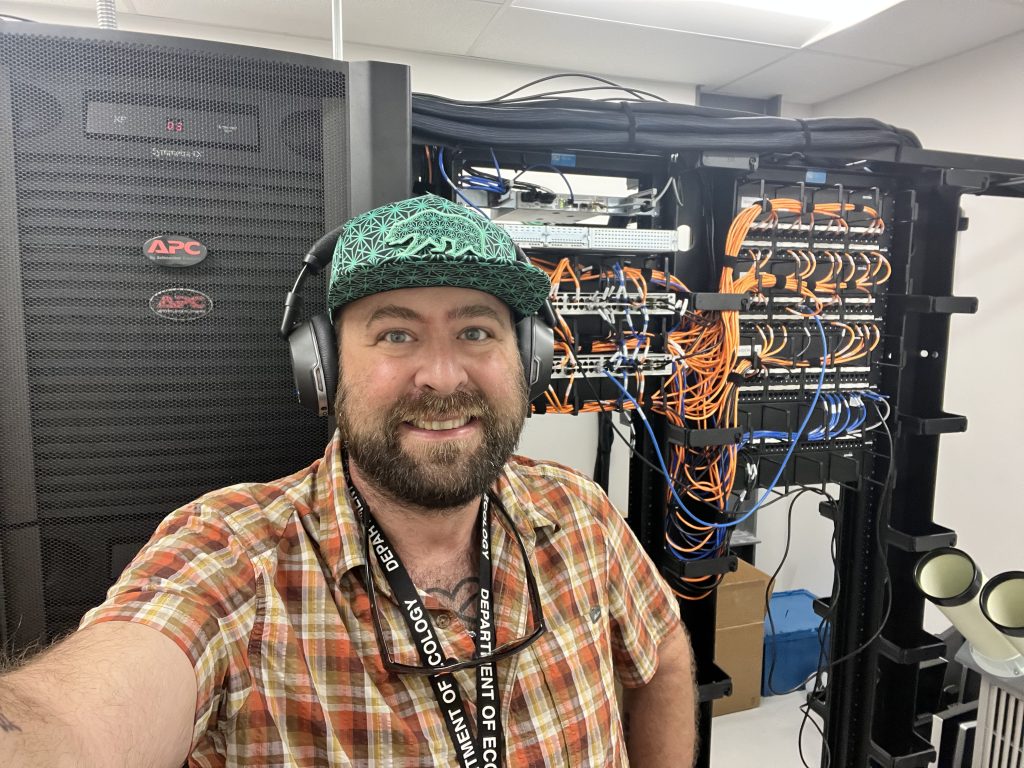
Leaving IT meant giving up the money, benefits, union, and being “the IT guy.” Without IT on my resume, I’m about as qualified as a 16-year-old at McDonald’s.
I miss the six figures. Part-time work means less pay, rarely any benefits, no paid time off, worse schedules, and less stability. But I can’t go back.
I still love tech. I automate my home, mess with my website, and code for fun. But regulations, politics, deadlines, and doing it for a paycheck? My brain can’t take it. It’s a hobby now. That’s fine.
I didn’t see the rest coming. The job had been paving over a big infected wound. Once the money was gone, I saw patterns in my connections and ended them. Then I saw the patterns in me. Then I saw what cannabis was doing to me. I stopped using that too. Then I learned I was autistic and what chronic masking was doing to me. I’m working on that.
Move the big thing out of the way, and the smaller stuff underneath surfaces. I tell the people I support that all the time. Move that, and more comes up. But you don’t have to move the big things again unless you go back to them.
I’m not going back to IT, toxic connections, drugs or alcohol, or those patterns. Now I have room for the smaller stuff. What showed up in that space? Freedom, autonomy, and solitude I actually love. No more fear of being alone.
I’m not caged anymore.
> there is such a thing as good grief: rest_state.sys
Acceptance has a close cousin, acquiescence. It comes from the Latin
acquiēscere (to find rest in)
That’s how I feel now.
When you keep fighting something you can’t win, you’re exhausted and hopeless all the fucking time. You can’t fight the tide. It comes and goes whether you like it or not.
Once I stopped fighting the finality of my disability, I found more peace, more happiness, less anxiety, and way more energy.
On September 8th, I stopped fighting a conflict that wasn’t going to change. The only thing I could change was my response. A therapist once told me, “No response is a response.” So I stepped back emotionally, stopped responding, cut off access, and went off the radar. I let go of things I’d been holding onto with everything I had. That included nearly every aspect of my current life.
Within weeks, my appetite came back, my sleep improved, and my stress and anxiety dropped. My quality of life had been garbage for ten months. Really, for most of my life, if you go back to when I started numbing.
And I can finally grieve. The last year. My whole life. The brain I lost. I can stop wasting energy on denial and avoidance, and put it into healing and things that bring me joy.
For years, “good grief” was an eye roll. Now I get it. Good grief is the kind you finally let yourself feel.
Acceptance means coming to terms with things so I suffer less and find more joy. That’s self-love. That’s love.
I am 2KVYOT3. I am unrecognizable. I am love.
And I am finally at rest.